
The Silent Drowning Truth
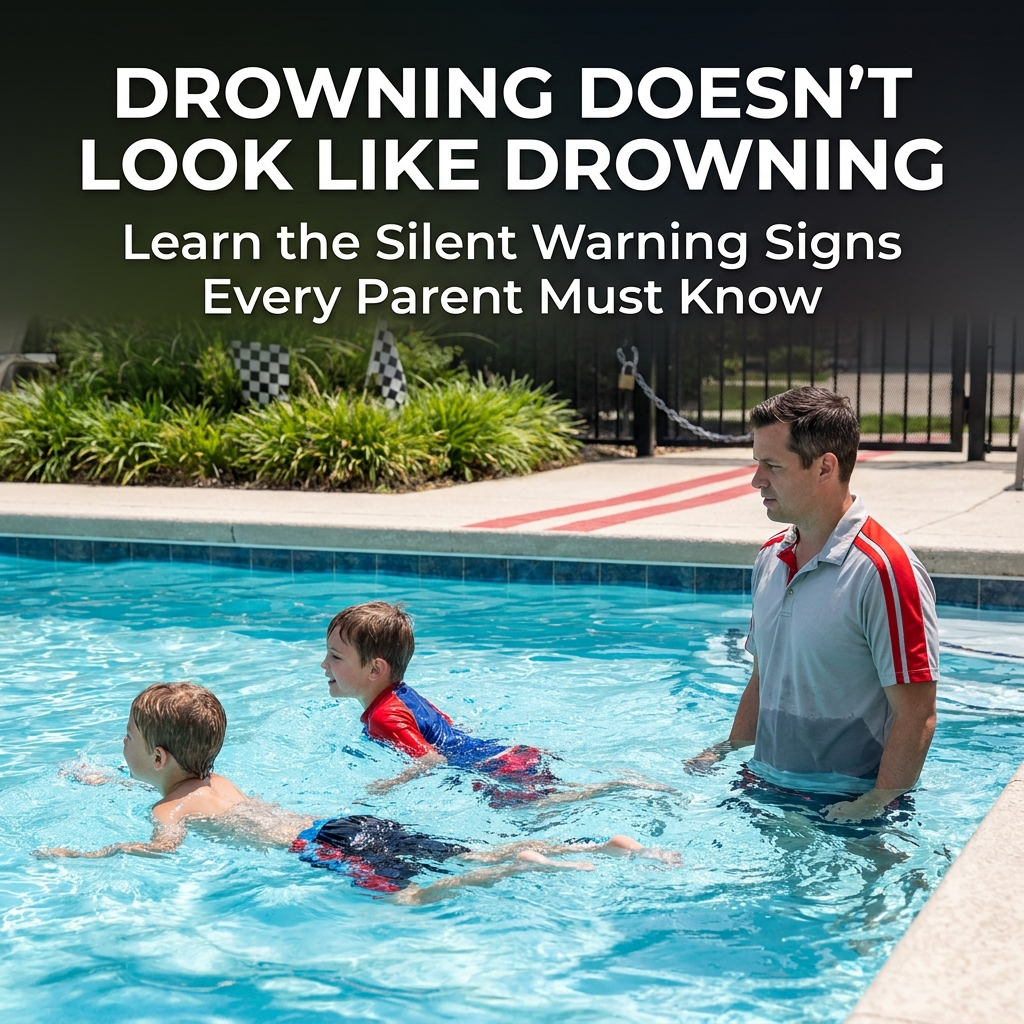
The Silent Drowning Truth Every Parker County Parent Must Know
Picture this: You're poolside, watching your child play in the water. Suddenly, they're in trouble. What does that look like to you?
If you're imagining thrashing arms, loud cries for help, and dramatic splashing like you've seen in movies—you need to read this. Your life-saving instinct might be programmed with the wrong signals.
This summer, families have already suffered massive tragedies at AirBNBs with swimming pools. Parents don't go over the pool rules with their children and either leave them alone or lose track of their children. It doesn't take long for the unimaginable to happen. This can literally happen to anyone.
Drowning Doesn't Look Like Drowning
Here's the truth that could save your child's life: Real drowning is silent, subtle, and happens fast. No yelling. No waving. No Hollywood drama. In fact, drowning often looks like nothing at all—and that's what makes it so dangerous.
As swimming safety experts serving the Parker County community, we've made it our mission to educate families about what drowning actually looks like. Because when you know what to watch for, you become your child's most powerful lifeguard.
What Does Real Drowning Look Like?
The Instinctive Drowning Response is the body's automatic reaction when it can't breathe. During this critical moment, a person physically cannot call for help—their body prioritizes breathing over vocalizing. Here are the warning signs every parent, grandparent, and caregiver must memorize:
Critical Warning Signs:
🚩 Head positioned low in the water – Mouth barely at water level, bobbing up and down
🚩 Eyes glassy, empty, or closed – Unable to focus or make eye contact
🚩 Vertical body position – Not the horizontal swimming position you'd expect
🚩 Hyperventilating or gasping – When the mouth rises above water, quick gasps before submerging again
🚩 Legs not kicking – Vertical underwater movement instead of propulsive swimming kicks
🚩 Attempting to roll onto back but failing – The body instinctively tries but can't coordinate the movement
🚩 Appears to be climbing an invisible ladder – Arms pressing down trying to lift the mouth above water
The Clock Is Ticking
You have 20 to 60 seconds to respond before submersion occurs. Less than a minute. That's how quickly a fun pool day can turn into a nightmare.
Your Three-Layer Defense Strategy
At Champion Technique, we believe in empowering families with knowledge and skills—not fear. Here's your comprehensive defense plan:
Layer 1: Active Supervision
This isn't casual pool monitoring while checking your phone or chatting with neighbors. Active supervision means:
- Dedicated water watcher – One adult, eyes on swimmers, no distractions
- Within arm's reach of young or inexperienced swimmers
- No phones, no books, no conversations – Nothing that pulls attention away
- Sober and alert – This is a serious responsibility
Think of it as your child's invisible life jacket. Your focused attention is their safety net.
Layer 2: Dryland Swimming Skills That Save Lives (Water Safety and Self-Rescue)
Learning to swim isn't just about in water safety—it's also about dryland safety. Dryland swimming instruction provides:
- Pool rules
- When family is home
- When parents are gone
- Self rescue skills at the pool (as well as practice)
- Stay away from the pool unless parents are there and give permission
Every drylan skill your child masters brings them closer to becoming water-safe.
Layer 3: Pool Barriers
Make sure there are plenty of barriers that prevent children from easily getting to the swimming pool:
- Locked gates (chimes on gate doors)
- Pool safety covers (not pool heat covers)
- Pool alarms
- Exit door chimes
Prepare your child not just for perfect conditions, but for the unexpected moments when training becomes survival.
Don't Wait for an Emergency
Summer is here. Pools are open. Families are going on vacation. Your kids are in the water. The question isn't if your child needs swim instruction—it's how strong is your family's defense against drowning?
Every day without proper swimming skills and water safety knowledge is a day of unnecessary risk. But here's the empowering truth: You have the power to change that right now.
Take the Next Stroke Toward Safety
At Champion Technique, we're ready to welcome your family into our swimming community. Together, we'll build the skills, confidence, and water safety knowledge that could one day save your child's life.
Because swimming and swimming safety are more than just skills—they are life lessons.
This blog post is part of our ongoing commitment to water safety education in the Parker County community. Share it with every parent, grandparent, and caregiver you know—this information saves lives.
Provide your email below to subscribe to our POOL SAFETY TIPS Newsletter:
