
Swimming vs. Water Safety: The Life-Saving Skills Your Child Needs
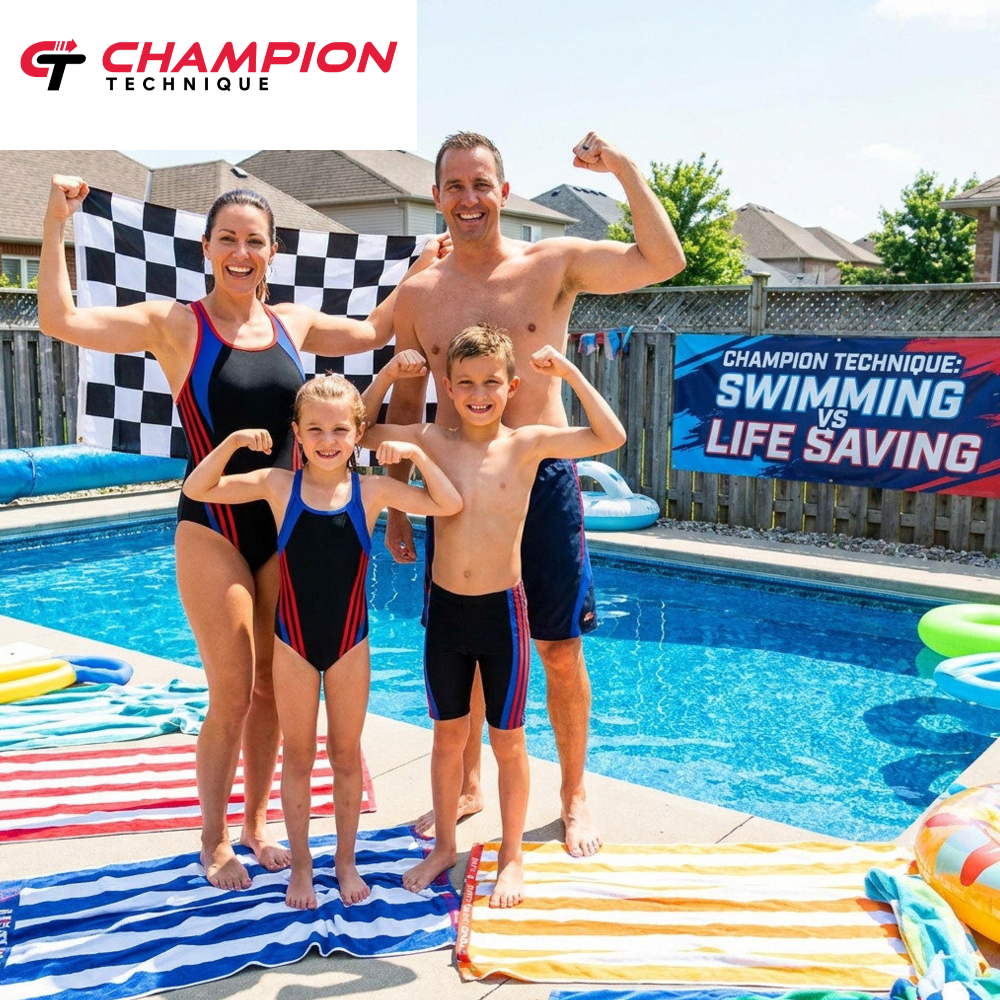
RESIDENTIAL POOL SAFETY TIP #2
Swimming vs. Water Safety:
The Life-Saving Skills Your Child Needs (And How to Make Learning Them Fun!)
Picture this: It's a beautiful Saturday afternoon in Parker County. Your child is splashing happily in your backyard pool, showing off their swimming skills. They can do the front crawl, they love jumping in, and they seem totally comfortable in the water.
But here's the question that should keep every pool-owning parent up at night: If your child accidentally fell into the pool fully clothed while you were inside grabbing snacks, would they know how to save themselves?
If you hesitated even for a second, this article is for you.
The Critical Difference Most Parents Don't Know About
the truth bomb: "Knowing how to swim" does NOT equal having water safety skills.
Your child might swim beautifully while you're watching from a lounge chair. They might take lessons every week and love the water. But swimming skills and self-rescue skills are two completely different things - and both are absolutely essential.
Swimming skills include proper technique, strokes, breathing patterns, and endurance. These are what we think of when we picture "swim lessons."
Water safety skills include self-rescue techniques, emergency response, survival floating, and the ability to get yourself out of danger when something unexpected happens.
Most traditional swim programs focus heavily on the first and barely touch the second. That's a problem.
The 4 Self-Rescue Skills That Could Save Your Child's Life
Every child who has access to a pool—whether at home, a friend's house, or a hotel—needs to master these four critical skills:
1. Corkscrew Kick (Roll to Back and Float)
If your child goes under or gets tired, they need to instinctively roll onto their back and float calmly while catching their breath or calling for help.
2. Navigate From Middle to Edge
They need to be able to get from any point in the pool to the nearest edge, even if they're panicked or disoriented.
3. Pull Themselves OUT of the Pool
This is HUGE. Getting to the edge isn't enough—they need the strength and technique to actually pull themselves up and out of the water without using stairs.
4. Respond to Clothed Water Emergencies
Clothes are heavy and restrictive when wet. Your child needs to know what this feels like and how to stay calm and execute their self-rescue skills even when fully dressed.
Turning Safety Practice Into Family Fun Time
Now, we know what you're thinking: "This sounds serious and maybe a little scary to teach."
But here's the beautiful secret - you can teach all of these life-saving skills through games, challenges, and quality family pool time! Your kids won't even realize they're learning emergency skills because they'll be too busy having fun.
The Back Float & Recovery Game
Start in shallow water where your child can stand. Have them practice rolling onto their back and floating with their ears in the water, belly up toward the sky, and arms gently out to the sides.
Make it fun: Set a timer and see if they can beat their "floating record." Count out loud: "10 seconds... 15 seconds... 20 seconds—you're a floating champion!" Add storytelling: "You're a sea otter resting on the ocean!" or "Float so still that you don't wake up the sleeping fish!"
Progress gradually: Start with you supporting their head or back, then just a finger, then hands off. Move to deeper water as confidence builds.
Why it matters: This is their reset button. When kids get tired, scared, or overwhelmed, rolling to their back gives them time to breathe and think.
The "Swim to Safety" Challenge
Have your child start in the middle of the pool (shallow end at first) and practice swimming directly to the nearest edge using any stroke that works for them.
Make it fun: Place their favorite floating toy at the wall and have them "rescue" it. Time them and create a "personal best" chart. Make it a treasure hunt: "Swim to the edge where the blue bucket is waiting!"
Level up: Gradually increase the distance. Practice from different spots in the pool. Eventually, have them try it with eyes closed (supervised closely!) to simulate disorientation.
Why it matters: In an emergency, kids need to know that the edge means safety, and they need to be able to get there from anywhere.
The "Superhero Exit" Challenge
This is where the magic happens—and it's harder than it looks! At the pool edge (in an area where they can touch the bottom), teach your child to:
Place both hands flat on the pool deck
Push their body up while kicking their feet
Swing one leg up onto the deck
Roll or pull the rest of their body out
Make it fun: Give them a superhero name every time they do it: "That was an amazing exit, Captain Splash!" Create an obstacle course where they have to swim to the edge and exit, then run to touch a cone, then jump back in and repeat.
Practice regularly: This takes arm strength and coordination. The more they practice, the easier it becomes.
Why it matters: Stairs or ladders might not be nearby in an emergency. This skill means they can get out from anywhere along the pool edge.
The "Splash Fashion Show" (Clothed Water Practice)
Choose a warm day and have your child wear a t-shirt and shorts (or full clothes for older, more advanced swimmers) into the pool.
Make it fun: Call it a "fashion show" or a "superhero costume swim." Talk about how different the water feels. Play their favorite pool games while dressed. Make it silly and low-pressure.
Progress gradually: Start with just a t-shirt. Add shorts. Eventually, practice with shoes (tennis shoes, not flip-flops). Always stay close and supervise.
Why it matters: Wet clothes are shockingly heavy and restrictive. If your child accidentally falls in at a pool party or near a lake, they need to know they can still float, swim to the edge, and get out—even while dressed.
The 5-Minute Safety Warm-Up Routine
Want to make self-rescue practice a habit without it feeling like a chore? Try this simple routine before free swim time:
Week 1-2: Practice back floating for 20-30 seconds
Week 3-4: Swim from middle to edge three times
Week 5-6: Practice pool exits five times
Week 7-8: Put it all together: float, swim to edge, exit
Week 9: Clothed water practice day!
Just five minutes of focused practice before they play makes an enormous difference. Celebrate every improvement, stay positive, and keep it light and fun.
Want More Life-Saving Pool Safety Tips?
This self-rescue guide is just Tip #2 in our Swim De Mayo Safety Series! There's so much more to learn about keeping your family safe around water - and we're here to help you every step of the way.
Imagine getting practical, easy-to-implement pool safety tips delivered right to your inbox. Tips that:
- Turn safety into fun family activities
- Give you confidence as a pool-owning parent
- Keep your kids safer without scaring them
- Are specifically designed for Parker County families like yours
That's exactly what our Pool Safety Tips and Tricks Newsletter delivers!
Your Pool Safety Promise
This summer, make a promise to your family: You'll prioritize water safety skills just as much as swimming skills. You'll make practice fun. You'll be consistent. And you'll never assume that "knowing how to swim" means your child is truly water-safe.
Print out this checklist and put it on your fridge:
✅ Practice back floating weekly
✅ Practice swimming to the edge from different spots
✅ Practice pool exits without using stairs
✅ Schedule clothed water practice once a month
✅ Always supervise—no matter their skill level
✅ Celebrate progress and keep it fun!
The Bottom Line
Self-rescue skills aren't about scaring your kids or taking the fun out of swimming. They're about empowerment, confidence, and giving your child the tools they need to handle unexpected situations in the water.
When you turn safety practice into games, challenges, and family bonding time, your kids won't see it as "serious safety lessons"—they'll just see it as fun time with you at the pool.
And one day, if they ever need these skills in a real emergency, they'll have the muscle memory and confidence to save themselves.
That's the gift of water safety. That's what every child deserves. And that's what we're committed to teaching Parker County families.
Don't Miss Another Life-Saving Tip!
Join hundreds of Parker County families who are making their pools safer one tip at a time.
Subscribe to Our Pool Safety Tips and Tricks Newsletter
Get exclusive access to:
✔️ Weekly pool safety tips you can implement immediately
✔️ Fun games and activities that teach water safety skills
✔️ Age-specific guidance for every stage of your child's development
✔️ Seasonal safety reminders and checklists
✔️ Expert insights from Champion Technique's swim professionals
✔️ Local Parker County pool safety resources and events
This is Tip #2. Imagine what you'll learn with Tips #3, #4, #5, and beyond!
Because when it comes to your child's safety, every tip matters. Every trick helps. And every family deserves the confidence that comes with water safety knowledge.
