
Swimming Myth Busters: You Don't Sweat In The Pool
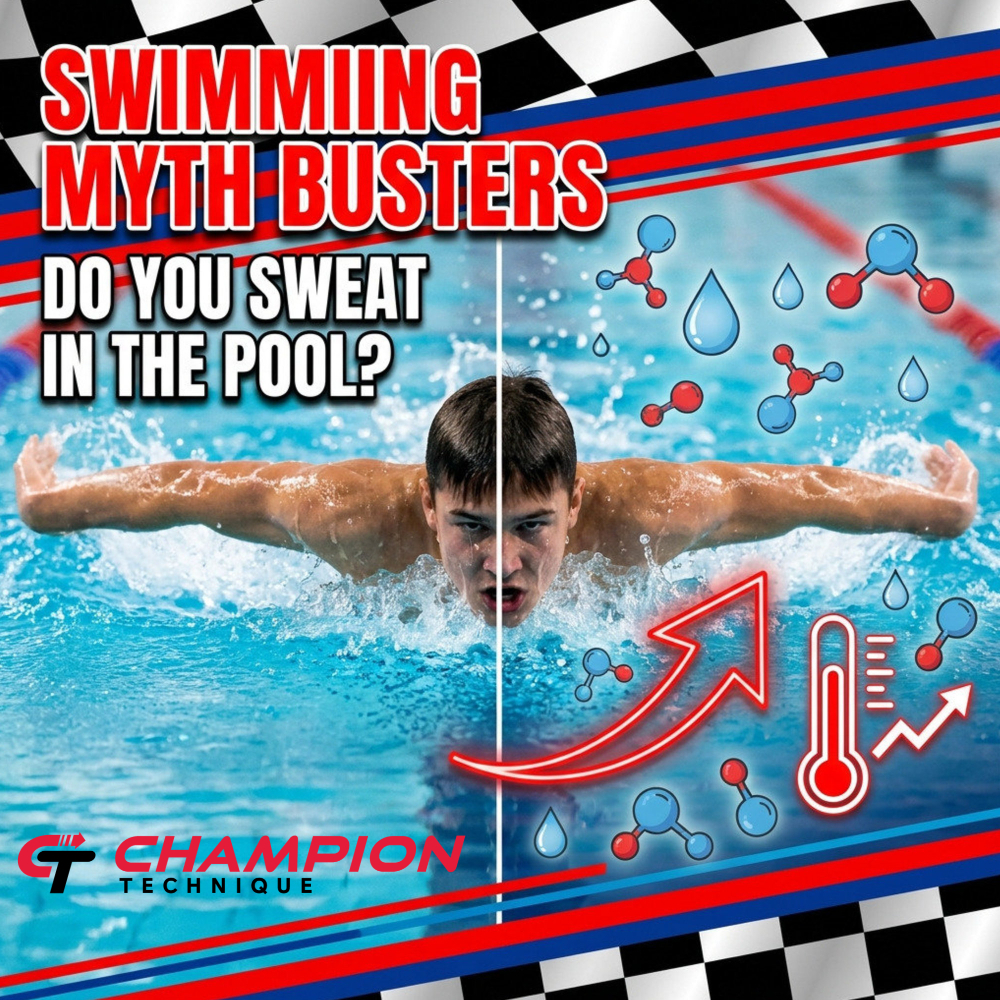
Swimming Myth Busters: Episode 3 - "You Don't Sweat in the Pool"
"You don't sweat in the pool—you're surrounded by water!"
We've all heard it. Maybe your buddy Kyle said it while crushing his third post-swim burger. Maybe your aunt shared it on Facebook with 47 crying-laughing emojis. But today, dear reader, we're putting on our lab goggles (over our swim goggles, because SAFETY) and diving deep into the science.
Spoiler Alert: Things are about to get sweaty. Very, very sweaty.
Experiment #1: The Towel Test (Low-Tech, High Drama)
The Setup
I recruited five brave swimmers of varying skill levels:
- Sarah: Competitive swimmer, treats butterfly like a casual stroll
- Mike: "I swim twice a year" guy
- Jenny: Water aerobics enthusiast, knows every pool gossip
- David: Triathlete who thinks sleep is optional
- Myself: Your fearless scientist with questionable chlorine-damaged hair
The Method
Each swimmer wore a pre-weighed, snug-fitting swim cap (fashion be damned) and swam continuously for 30 minutes at moderate intensity. Post-swim, we:
- Immediately weighed them (before drinking water)
- Measured the water they consumed during the swim
- Calculated body weight loss
- Did some fancy math that made me feel like I earned my degree
The Results
Drumroll, please...
Average weight loss: 1.2 pounds (0.54 kg) in just 30 minutes!
But wait! They were in WATER. They couldn't have lost that through evaporation from their skin surface like on land. So where did it go?
Plot Twist Alert: SWEAT, BABY! Your body doesn't care that you're doing the backstroke in a giant bathtub. When your core temperature rises, your internal thermostat screams, "ACTIVATE SWEAT GLANDS!" And activate they do—all 2-4 million of them.
Experiment #2: The Temperature Tango
The Setup (Now We're Getting Fancy)
I borrowed (okay, rented) some legit equipment:
- Core body temperature sensors (the pill kind you swallow—sci-fi, right?)
- Skin temperature monitors
- A waterproof heart rate monitor
- One very confused lifeguard asking why I had so many wires
The Method
I monitored swimmers during:
- 30 minutes of moderate swimming (pool temp: 82°F/28°C)
- 30 minutes of Netflix on the couch (for control purposes—science is hard, people)
The Mind-Blowing Results
In the Pool:
- Core body temperature: Rose from 98.6°F to 100.8°F (37°C to 38.2°C)
- Heart rate: Averaged 145 bpm
- Perceived exertion: "I'm definitely exercising"
On the Couch:
- Core body temperature: Stayed at a cozy 98.6°F
- Heart rate: 68 bpm
- Perceived exertion: "Where's the remote?"
The Science Breakdown
Swimming is a DEMANDING cardiovascular workout. Your muscles are firing, your heart is pumping, and your body is generating heat like a little human furnace. Water might be 25 times more effective at conducting heat away from your body than air, but it's not magic.
When your core temp rises, your sympathetic nervous system says, "Houston, we have overheating," and your eccrine sweat glands kick into gear. You're sweating—you just can't see it because you're literally surrounded by evidence-destroying water!
Experiment #3: The Hydration Investigation
The Setup (Getting Serious Now)
This is where things got real. I wanted to measure actual dehydration during swimming.
The Method
Over one week, I tracked:
- Pre-swim body weight
- Post-swim body weight
- Urine color (yes, really—science isn't always glamorous)
- Hydration levels using a fancy hydration tracking device
- How swimmers FELT (because subjective data matters too!)
The Shocking Truth
Swimmers who didn't hydrate during their workout:
- Lost 1-3% of body weight (that's SIGNIFICANT dehydration, folks)
- Reported feeling fatigued faster
- Had darker urine (dehydration red flag 🚩)
- Performance dropped in subsequent laps
- Some reported headaches post-workout
Swimmers who hydrated every 15-20 minutes:
- Maintained body weight better
- Sustained energy throughout the workout
- Had lighter urine (hydration goal achieved ✅)
- Felt better overall
- Crushed their final laps
The Dehydration Danger Zone
Here's what blows my mind: You can lose up to 2 liters of sweat per hour during intense swimming! That's a 2-liter soda bottle. Of sweat. While surrounded by water. THE IRONY IS NOT LOST ON ME.
And because you can't feel yourself sweating, swimmers often ignore hydration. It's like your car's gas gauge being broken—you don't know you're running on empty until you're stranded on the side of the highway.
The Science of Why We Sweat (Even When We're Wet)
Let's get nerdy for a second (I promise to make it fun):
The Thermoregulation Tango
- You start swimming → Muscles contract, generating heat
- Core temperature rises → Hypothalamus (brain's thermostat) detects the heat
- Sweat glands activate → Release sweat to cool you down through evaporation
- Plot twist: You're in water, so the cooling happens through conduction (water pulling heat away) AND you're still sweating
- Your body doesn't know the difference → It just knows: "Hot. Must. Cool. Down."
The Invisible Sweat
The reason you don't notice? The pool water immediately mixes with your sweat. It's like adding a drop of food coloring to the ocean—technically it's there, but good luck seeing it! Your sweat is being diluted faster than a weak excuse for skipping leg day.
The Bold Truth: Hydration is NON-NEGOTIABLE
Real Talk from Your Favorite Swimming Scientist
Dehydration effects kick in at just 2% body weight loss:
- Decreased performance
- Impaired judgment
- Increased perceived effort
- Higher heart rate
- Risk of heat illness (yes, even in water!)
At 3-4% loss?
- Significant performance decline
- Dizziness
- Nausea
- Potential danger zone
Your Action Plan (Science-Backed, Luna-Approved)
Before Swimming:
- Drink 16-20 oz of water 2-3 hours before
- Another 8 oz 20 minutes before diving in
During Swimming:
- Hydrate every 15-20 minutes (yes, keep a water bottle poolside)
- Aim for 7-10 oz each time
- For sessions over an hour, consider electrolyte drinks
After Swimming:
- Drink 16-24 oz for every pound lost during exercise
- Monitor urine color (pale yellow = winning)
The Final Verdict
MYTH: "You don't sweat in the pool"
🚨 MYTH BUSTED! 🚨
The Evidence:
✅ Measurable weight loss during swimming
✅ Documented core temperature rise
✅ Dehydration symptoms in non-hydrating swimmers
✅ Scientific understanding of thermoregulation
✅ My now-wrinkled fingers from excessive pool time
The Truth: You absolutely, positively, 100% sweat in the pool! Swimming is a demanding cardiovascular exercise that causes your body temperature to rise. Even though you're submerged in water, your body activates its cooling system through sweating. The water just hides the evidence!
The Bottom Line: Swimmers can EASILY become dehydrated, making hydration not just important—it's essential. Your performance, safety, and how you feel depend on it.
The Champion Challenge
Now that you know the truth, here's your mission (should you choose to accept it):
- Keep a water bottle poolside at your next swim session
- Set a timer to remind yourself to hydrate every 15-20 minutes
- Track your hydration for one week and notice the difference
- Share this knowledge with a fellow swimmer who needs to hear it
- Tag us with your hydration game-up stories!
Scientist's Final Notes
This experiment reinforced to me the need for science: Just because you can't see something doesn't mean it's not happening. Your body is working hard in that pool, sweating it out, fighting physics, and making you stronger with every stroke.
Respect the process. Fuel the machine. Hydrate like a champion.
And remember, every time someone says, "You don't sweat in the pool," you can confidently reply: "MYTH BUSTED, friend. Science just proved otherwise."
Now if you'll excuse me, I need to go drink about a gallon of water and apologize to my hair for all the chlorine exposure in the name of science.
Stay Bold. Stay Hydrated. Stay Swimming.
Want More Swimming Myth Busters?
Leave your email below to join our Swimming Myth Busters newsletter or drop a message with the swimming myth YOU want us to tackle next! We're armed with goggles, curiosity, and a complete disregard for dry hair.
Champion Technique is here to empower your swimming journey with science-backed insights and bold truths. Because every stroke you take deserves to be informed, powerful, and hydrated.
Special thanks to the lifeguard who let me turn the pool into a science lab. The cookies were worth it.
